
 Deutsch
 Tiếng Việt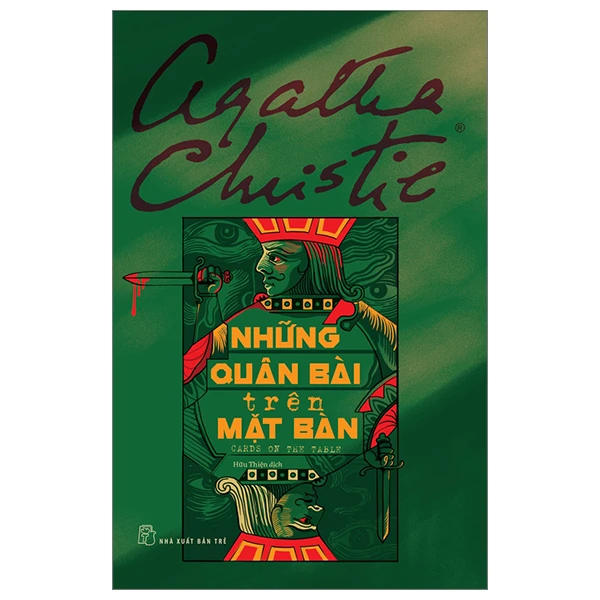
detailed information
“Cards on the Table” by Agatha Christie is widely regarded as one of the most ingenious and psychologically sophisticated mysteries featuring the legendary detective Hercule Poirot. First published in 1936, the novel stands apart from many traditional detective stories by placing less emphasis on physical evidence and more on the motives, personalities, and hidden emotions of its characters. The result is a fascinating intellectual puzzle that challenges both Poirot and the reader.
The story begins when the eccentric and wealthy Mr. Shaitana invites eight guests to a dinner party followed by a game of bridge. Four of the guests are celebrated crime solvers, including Hercule Poirot, while the other four are individuals whom Shaitana privately suspects have committed murder in the past but escaped justice. During the evening, while the guests are absorbed in their card game, Shaitana is quietly murdered. Because everyone remains inside the house, the killer must be one of the people at the table.
Unlike many detective novels, “Cards on the Table” offers very little forensic evidence. Instead, Poirot relies on his extraordinary understanding of human psychology, carefully studying each suspect’s behavior, habits, and reactions. The investigation becomes a battle of intellect in which the smallest detail of character may reveal the truth.
More than a classic whodunit, “Cards on the Table” is a brilliant exploration of personality, deception, and the complexity of human nature. With its elegant construction and surprising resolution, the novel remains one of Agatha Christie’s finest and most admired achievements.
You might like
Related products
Detective novel / Detective fiction

Detective novel / Detective fiction
Death in the Clouds – Án mạng giữa không trung – Agatha Christie

Detective novel / Detective fiction
The Mysterious Affair at Styles – Bí ẩn thảm án ở Styles – Agatha Christie

Detective novel / Detective fiction
Detective novel / Detective fiction
Detective novel / Detective fiction
Arsène Lupin, Gentleman Burglar – Siêu Trộm Quân Tử Arsène Lupin – Maurice Leblanc

Detective novel / Detective fiction